
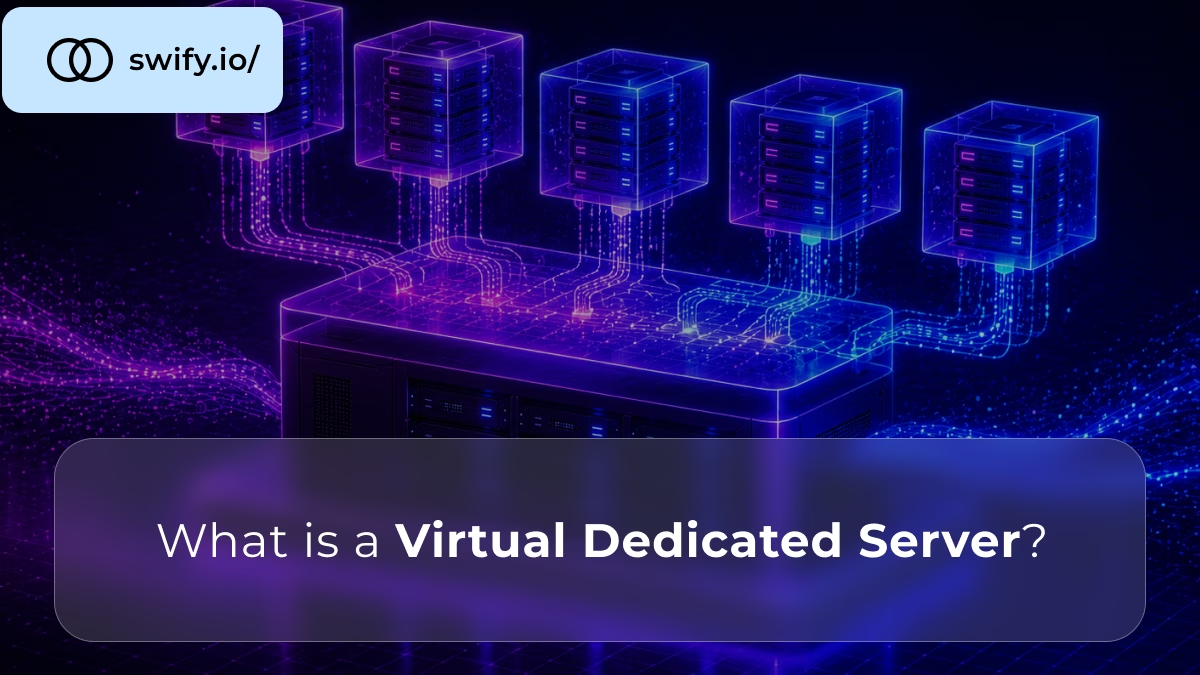
What is a virtual dedicated server, exactly? The honest answer is: it depends entirely on who is selling it to you. Unlike “Tier III data centre” or “PCI-DSS compliant”, nothing certifies what a provider can call a Virtual Dedicated Server. The term can describe something genuinely different from a standard VPS, or it can describe the exact same product with a more expensive-sounding name. Both happen, constantly, and there is no label on the outside of the box that tells you which one you are looking at.
This guide explains what VDS is supposed to mean, why the term cannot be trusted on its own, and how to verify what you are actually buying before you commit to it.
📖 New to server infrastructure terminology?
Read What Is a Dedicated Server?, a foundational guide to what genuine dedicated infrastructure actually is.
What “Virtual Dedicated Server” Is Supposed to Mean
Where the term is used with technical precision, a Virtual Dedicated Server describes a virtual machine with CPU and RAM reserved exclusively for one tenant, rather than drawn from a shared pool. A standard VPS typically guarantees a minimum allocation but allows tenants to burst into unused capacity, and compete for it when several tenants burst simultaneously. A VDS, in this stricter definition, reserves that capacity so it is never available to anyone else, virtualised, but not shared at the resource level.
That distinction is real when providers implement it. The problem is that nothing requires them to.
Three tiers, what each one actually shares
| VPS | VDS (as intended) | Dedicated Server | |
|---|---|---|---|
| Physical hardware | Shared | Shared | Exclusive |
| CPU/RAM allocation | Guaranteed minimum, can compete | Reserved, never shared | Entirely yours |
| Hypervisor | Yes | Yes | None |
| Term standardised? | Reasonably consistent | No, provider-defined | Reasonably consistent |
Table comparing VPS, VDS, and Dedicated Server across physical hardware sharing, CPU and RAM allocation model, hypervisor presence, and whether the term itself is standardised. VDS is the only one marked as provider-defined.
The Real Problem: The Label Is Not Verifiable
According to Cherry Servers, many hosting providers use VPS and VDS as interchangeable marketing terms, and their own technical distinction, CPU and memory reserved exclusively versus drawn from a shared pool, only holds if a provider actually implements it that way. Nothing forces them to.
This is fundamentally different from the other terms this blog has covered. PCI-DSS compliance can be audited. Tier III certification comes from a single licensed body. “Virtual Dedicated Server” comes from whoever wrote the product page, and there is no independent body checking whether the resource reservation behind it is real, partial, or entirely absent.
The practical result: a business searching for infrastructure with predictable, reserved resources can end up on a relabelled standard VPS, paying a premium for a name rather than for anything the hardware actually delivers differently.
📖 What genuine dedicated infrastructure actually eliminates
Read Physical Server vs Virtual Server: What’s the Real Difference?, with measured performance overhead and the noisy neighbour effect that persists regardless of what a virtualised tier is called.
What “Dedicated” Never Means in VDS, No Matter How It’s Configured
Even a VDS implemented exactly as intended, genuine CPU and RAM reservation, remains virtualised. It still runs on a hypervisor. It still shares the same physical machine, the same storage controller, the same network interface card, as other tenants. Reserved CPU cycles do not reserve disk I/O or network bandwidth unless a provider explicitly says so, and most do not.
A well-configured VDS solves resource contention for the two components most providers reserve. It does not deliver physical isolation, and it does not remove the hypervisor layer that a genuinely dedicated server has none of. The word “dedicated” in the name describes the resource allocation model, not the hardware relationship.
📖 What physical isolation actually removes
Read What Is a Bare Metal Server? for the full explanation of what having no hypervisor at all actually means.
How to Verify What You’re Actually Buying
Since the label cannot be trusted alone, four specific questions cut through it:
Is the CPU allocation reserved or a guaranteed minimum? These are different promises. Reserved means never shared. A guaranteed minimum still allows contention above that floor.
What is the oversubscription ratio on this host? A provider willing to answer this directly is more likely to have a real reservation model behind the name.
Does the reservation extend to disk I/O and network, or only CPU and RAM? Most VDS implementations only cover the two most commonly cited resources.
What hypervisor is used, and is it dedicated per customer or shared? This does not change the virtualisation itself, but answers to specific questions reveal more than a marketing label ever will.
Skip the label, get the real thing
Swify’s dedicated servers give you an entire physical machine, no hypervisor, no shared tenancy, and no terminology to verify. Full root access, NVMe storage, European datacentres.
→ Explore Swify Dedicated ServersFrequently Asked Questions
What is a virtual dedicated server?
A Virtual Dedicated Server, where the term is used precisely, is a virtual machine with CPU and RAM reserved exclusively for one tenant rather than drawn from a shared resource pool. It still runs on a hypervisor and still shares the underlying physical hardware with other virtual machines. The term is not standardised or certified, so providers apply it inconsistently, sometimes to describe a genuine reservation model, sometimes as a rebranded standard VPS.
Read What Is a Dedicated Server? for what genuinely dedicated infrastructure means by contrast.
Is a VDS the same as a dedicated server?
No. A VDS, even implemented exactly as intended, remains virtualised: it runs on a hypervisor and shares physical hardware, storage controllers, and network interfaces with other tenants. A dedicated server has no hypervisor and no shared tenancy at all. The word “dedicated” in VDS refers to reserved resource allocation, not to exclusive hardware.
Read Physical Server vs Virtual Server: What’s the Real Difference? for the measured performance gap between them.
How do I know if a VDS has genuinely reserved resources?
Ask the provider directly whether CPU allocation is reserved or a guaranteed minimum, what the host’s oversubscription ratio is, and whether the reservation covers disk I/O and network in addition to CPU and RAM. A provider that answers these specifically is more likely to have a genuine reservation model behind the name than one that only repeats marketing language.
Why isn’t “Virtual Dedicated Server” a standardised term?
Unlike compliance frameworks such as PCI-DSS, which are audited, or data centre tier classification, which a single licensed body certifies, hosting product naming has no equivalent authority. Providers are free to apply “VDS” to whatever resource allocation model they choose, which is why the same term can describe genuinely different products depending on who is selling it.
Read Data Center Tier Classification for an example of a term that is independently certified, by contrast.
Does a VDS eliminate the noisy neighbour effect?
Only partially, and only for the resources actually reserved. A well-configured VDS reserving CPU and RAM prevents contention on those two specifically. It does not automatically protect disk I/O or network bandwidth unless the provider states this explicitly, and both remain common sources of the noisy neighbour effect on shared physical hardware.
Read Understanding Server Load: How Dedicated Servers Handle High Traffic for how resource contention manifests under load.
When is a VDS a reasonable choice instead of a dedicated server?
When the provider can specifically confirm genuine CPU and RAM reservation, and the workload does not require physical isolation for compliance or extreme performance consistency, a properly implemented VDS can be a reasonable middle step between standard VPS and full dedicated hardware. It remains the wrong choice whenever the answer to “reserved or shared” cannot be confirmed directly.