
Website performance is no longer a nice-to-have. It directly impacts user experience, search engine visibility, and business results. As websites serve users across different regions and devices, delivering content quickly and reliably becomes increasingly complex.
This is where a Content Delivery Network (CDN) plays a critical role.
A CDN helps websites load faster, handle traffic more efficiently, and remain accessible even during high demand. This article explains what a CDN is, how it works, and why it has become an essential component of modern web infrastructure.
Website speed depends on more than one component.
DNS resolution, server load, and infrastructure design all influence how quickly users reach your content.
:: How DNS Works and Why It Matters for Web Performance ::
:: What Is Server Load and Why Websites Slow Down ::
What Is a Content Delivery Network (CDN)?
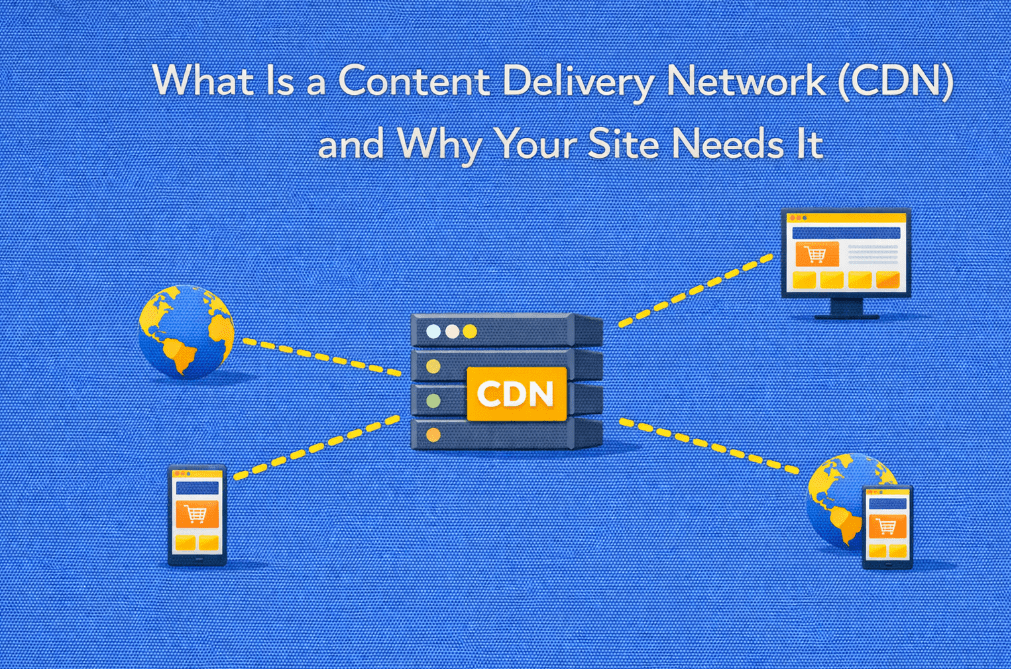
A Content Delivery Network is a geographically distributed network of servers designed to deliver web content to users from locations closer to them.
Instead of every request being served from a single origin server, a CDN caches and delivers content from edge servers located around the world.
At a high level, a CDN:
- Reduces the physical distance between users and content
- Distributes traffic across multiple servers
- Improves load times and reliability
- Protects origin servers from excessive load
CDNs are commonly used to deliver:
- Static assets (images, CSS, JavaScript)
- Video and media files
- APIs and dynamic content (with advanced configurations)
How a CDN Works
When a user requests a website using a CDN, the request is handled differently than with traditional hosting.
Simplified Request Flow
- The user requests a page or asset
- The CDN routes the request to the nearest edge server
- If the content is cached, it is served immediately
- If not cached, the edge server fetches it from the origin server
- The content is delivered to the user and stored for future requests
This process happens in milliseconds, but it significantly improves performance at scale.
Why CDNs Improve Website Performance
Reduced Latency
Latency is the time it takes for data to travel between a user and a server.
A CDN reduces latency by:
- Serving content from geographically closer locations
- Minimizing long-distance network hops
- Reducing congestion on the origin server
This results in faster page loads, especially for global audiences.
Faster Page Load Times
By caching and optimizing delivery of static content, CDNs:
- Reduce time to first byte (TTFB)
- Accelerate asset loading
- Improve perceived performance
Faster websites lead to:
- Lower bounce rates
- Higher engagement
- Better SEO performance
Improved Traffic Handling
CDNs help absorb traffic spikes by distributing requests across multiple edge servers.
This is especially valuable during:
- Marketing campaigns
- Product launches
- Seasonal traffic peaks
- Unexpected viral events
Without a CDN, all traffic hits the origin server directly, increasing the risk of overload.
CDN and Server Load Reduction
Reducing origin server load is only one part of the equation.
Understanding how server resources behave under pressure is essential to avoid performance bottlenecks.
:: Best Tools to Monitor Dedicated Server Performance ::
One of the most practical benefits of a CDN is reducing load on the origin server.
By offloading content delivery:
- Fewer requests reach the backend infrastructure
- CPU and memory usage remain more stable
- Databases experience less pressure
- Overall server performance improves
This allows servers to focus on dynamic processing rather than static delivery.
CDN and Website Reliability
CDNs also improve availability and resilience.
Key reliability benefits include:
- Redundancy across multiple geographic regions
- Automatic failover if an edge node becomes unavailable
- Continued content delivery even during partial outages
A CDN does not replace hosting, but it adds an important layer of protection.
CDN and Security Benefits
Modern CDNs provide more than performance optimization.
Common security features include:
- DDoS mitigation
- Web Application Firewall (WAF) integration
- Rate limiting
- TLS/SSL termination at the edge
By filtering malicious traffic before it reaches the origin server, CDNs enhance overall security posture.
When a CDN Becomes Essential
A CDN is particularly valuable when:
- Your audience is geographically distributed
- Page speed impacts conversions or rankings
- Traffic patterns are unpredictable
- Media or static assets are heavy
- Backend resources are under pressure
As websites grow, relying on a single server location becomes increasingly inefficient.
CDN vs Hosting Infrastructure
A CDN enhances delivery, but long-term performance still depends on the strength of the underlying server.
:: What Is Server Virtualization and Why Does It Matter? ::
It is important to understand that a CDN and hosting serve different purposes.
- CDN: Optimizes content delivery and reduces latency
- Hosting / Servers: Process requests, run applications, and store data
For best results, CDNs are combined with:
- Optimized server infrastructure
- Adequate CPU, memory, and storage resources
- Scalable hosting environments
A fast CDN cannot compensate for an underpowered server, but together they form a strong performance foundation.
Best Practices for Using a CDN
To get the most value from a CDN:
- Cache static assets effectively
- Define clear cache expiration policies
- Monitor cache hit ratios
- Align CDN configuration with your hosting setup
- Test performance regularly from different regions
CDNs should be treated as part of a broader performance strategy, not a standalone fix.
So…
A Content Delivery Network is a fundamental component of modern web performance. It helps websites load faster, handle traffic more efficiently, and remain reliable under pressure.
While a CDN alone will not solve every performance challenge, it significantly improves how content is delivered to users worldwide. Combined with the right hosting infrastructure, it enables websites to scale confidently while maintaining speed and stability.
As user expectations continue to rise, CDNs are no longer optional, they are part of the baseline for delivering fast, reliable web experiences.
High-performance delivery starts with the right foundation.
A CDN can dramatically improve speed and reliability — but it reaches its full potential when paired with powerful, stable infrastructure.
If predictable performance, scalability, and control matter to your business, dedicated servers from Swify provide the foundation your CDN needs to perform at its best.
Explore dedicated server solutions at https://swify.io
❓FAQ 1
Does a CDN replace the need for a powerful server?
No. A CDN optimizes content delivery, but the origin server is still responsible for processing dynamic requests, running applications, and handling databases. If the server is underpowered, performance issues will persist even with a CDN.
❓FAQ 2
Can a CDN help with high server load?
Yes, CDNs reduce server load by offloading static assets and absorbing traffic spikes. However, high load caused by backend processing, databases, or inefficient code still requires server-side optimization.
❓FAQ 3
Is a CDN enough to fix slow websites?
Not always. While CDNs reduce latency and improve delivery, slow DNS resolution, limited CPU resources, or disk bottlenecks can still impact performance.
❓FAQ 4
Do dedicated servers benefit more from a CDN than shared hosting?
Yes. Dedicated servers provide consistent resources and full configuration control, allowing CDN caching rules, security policies, and traffic routing to be optimized without platform limitations.
❓FAQ 5
When should a growing website combine CDN and dedicated servers?
When traffic increases, audiences become global, or performance directly impacts revenue, combining a CDN with dedicated infrastructure ensures scalability, stability, and predictable performance.